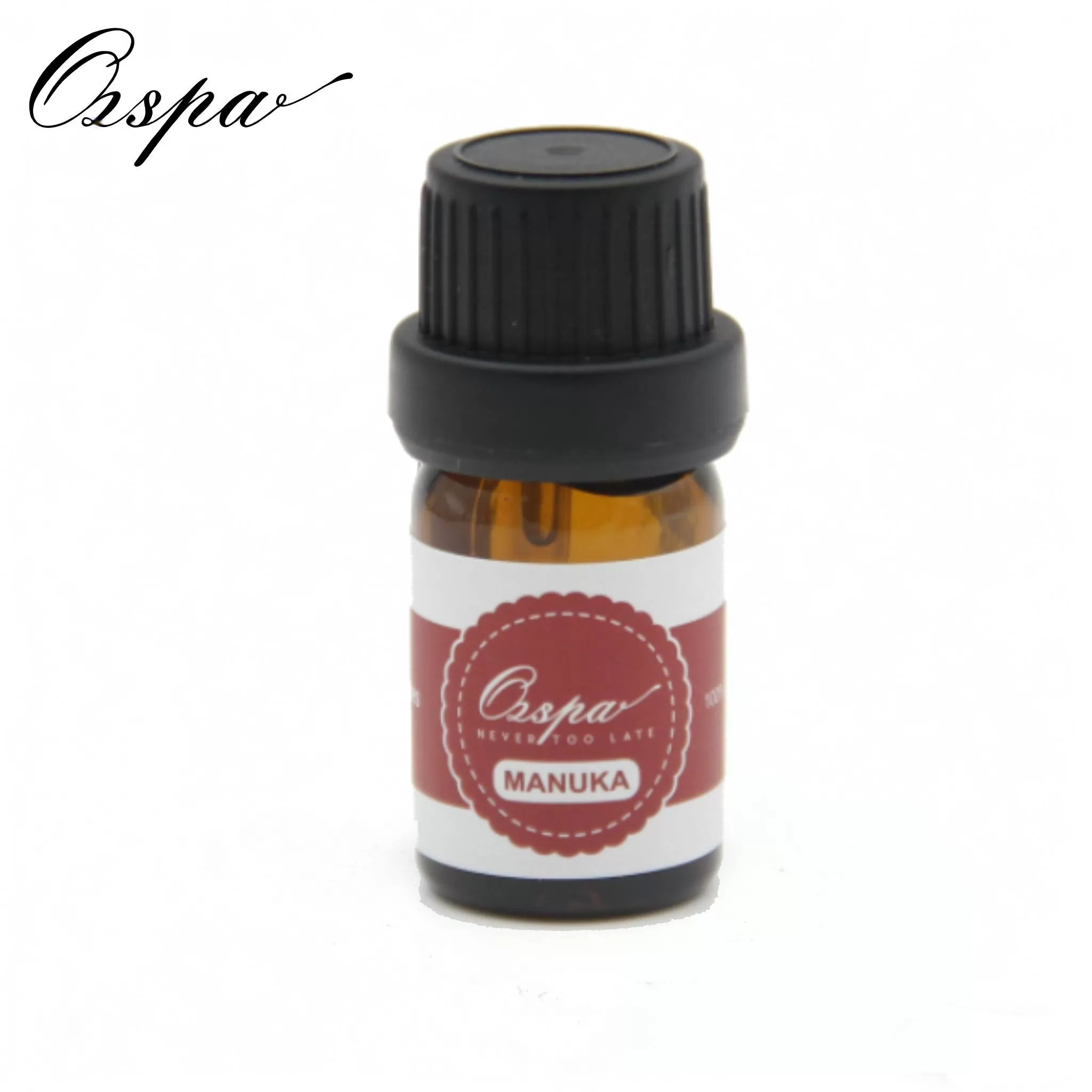
Manuka Essential Oil
$115
$144
Free shipping for orders over $100
Harness the exceptional power of Manuka essential oil, revered from New Zealand’s unique Leptospermum scoparium tree. Renowned for its broad-spectrum, yet gentle antibacterial properties, it’s a superior choice for supporting the healing of acne, minor wounds, and skin irritations, even on sensitive skin. Also valued for respiratory comfort. Discover why it’s considered a step beyond Tea Tree oil.
Manuka essential oil is steam-distilled from the leaves and small branches of the Manuka tree (Leptospermum scoparium), a native plant of New Zealand. It is part of the same botanical family as Tea Tree (Melaleuca alternifolia) but possesses a distinct and more complex chemical profile. Its aroma is warm, earthy, herbaceous, and slightly honeyed, with spicy and woody undertones—richer and less medicinal than Tea Tree. Renowned for its exceptional antimicrobial potency, Manuka oil is a treasured and powerful therapeutic agent in modern aromatherapy and natural skincare.
Contains unique compounds like leptospermone, triketones, and β-triketones, which give it outstanding antibacterial, antiviral, and antifungal properties—often exceeding those of Tea Tree oil for certain strains. Effective against stubborn skin pathogens, including MRSA.
A premier oil for treating severe acne, boils, infected wounds, ulcers, and fungal infections (like athlete's foot or nail fungus). Promotes rapid wound healing and reduces inflammation.
Highly effective for eczema, psoriasis, dermatitis, and allergic rashes. Its anti-inflammatory action helps calm redness, itching, and swelling.
Its antiseptic and expectorant properties make it valuable for fighting respiratory infections, clearing congestion, and soothing sore throats when used in steam inhalation or chest rubs.
Used in natural dentistry for its ability to combat gingivitis, plaque, and oral infections. Can be added (highly diluted) to mouthwash or toothpaste.
Diffused to purify indoor air and surfaces, especially during cold and flu seasons.
Topical Treatment for Skin Infections: Dilute at 2–5% (2-5 drops per teaspoon of carrier oil) and apply directly to affected areas (acne, cuts, fungus) with a cotton swab.
Wound Care: Add 2-3 drops to a clean wound dressing (on the pad, not directly on open skin) or dilute in a healing carrier oil like tamanu or calendula.
Steam Inhalation: Add 1-2 drops to a bowl of hot water to relieve sinus congestion or respiratory discomfort.
Natural Cleaning: Add 15-20 drops per 500ml of cleaning solution for disinfecting surfaces.
Mouthwash (Diluted): Add 1 drop to a small glass of water, swish, and spit out (do not swallow).
Potent & Concentrated: Always dilute for topical use. May cause skin irritation or sensitization in high concentrations—perform a patch test.
Oral Use: Do not ingest unless formulated in a product specifically designed for internal use and under professional guidance.
Pregnancy & Breastfeeding: Safety data is limited; avoid use or consult a healthcare provider.
Children: Use with extreme caution, at very low dilutions (≤1%), and avoid facial application for young children.
Allergies: Those allergic to plants in the Myrtaceae family (e.g., eucalyptus, clove) should exercise caution.
Phototoxicity: Not considered phototoxic.
Manuka blends well with oils that complement its medicinal, earthy character:
Citrus: Lemon, Bergamot (to brighten its deep scent)
Herbal/Medicinal: Lavender, Rosemary, Tea Tree (synergistic antimicrobial blends)
Woody: Cedarwood, Sandalwood (adds grounding depth)
Resinous: Frankincense, Myrrh (enhances wound-healing properties)
Spice: Ginger, Black Pepper (for warming, circulatory blends)